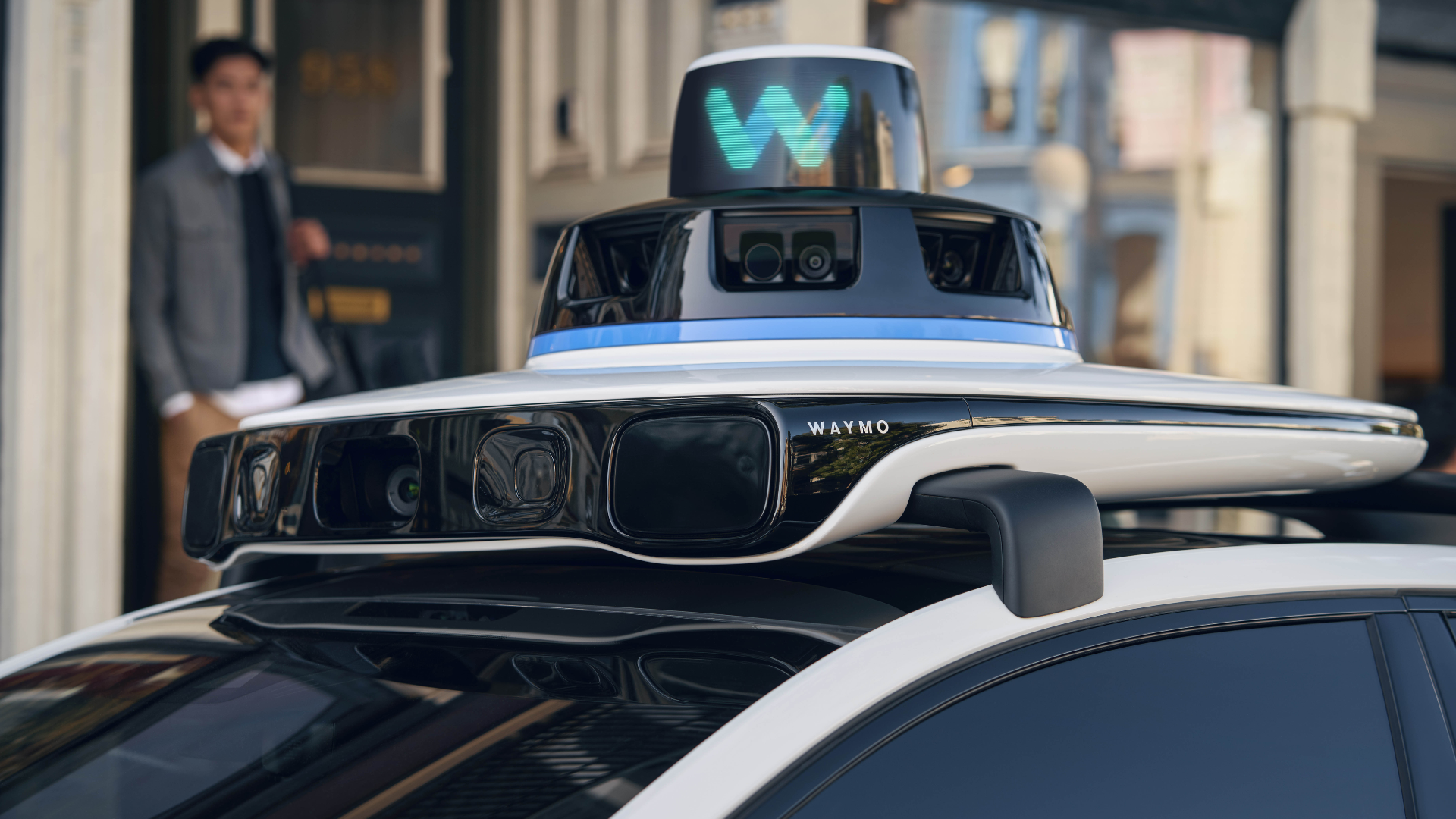
Not long ago, self-driving cars were the kind of thing you would see in a concept video and think, sure, maybe in 30 years. Today, if you live in San Francisco, you can hail a Waymo the same way you would call an Uber, except there is no one behind the wheel. And apparently, that is just the beginning.
$16 billion. Let that sink in.
In February 2026, Waymo, a subsidiary of Alphabet, Google’s parent company, closed one of the largest funding rounds ever seen in the autonomous mobility space, led by Dragoneer Investment Group, DST Global, and Sequoia Capital. The round values the company at $126 billion. Sixteen billion dollars is the kind of number that says something loud and clear: investors are not just believing in this anymore, they are betting on it.
Among the priorities: growing the electric vehicle fleet, accelerating U.S. expansion, and pushing into international markets. London and Tokyo are the main targets, part of a broader plan to roll out in over 20 additional cities in 2026. As Waymo put it in its own blog post: “We are no longer proving a concept. We are scaling a commercial reality.”
And the numbers back that up. The company now handles 400,000 rides per week across six major U.S. metropolitan areas, and recorded 15 million rides in 2025 alone.
London and Tokyo: bold moves, real challenges
Breaking into either of these cities is no small feat. It’s not just about driving on the left side of the road in London, or navigating one of the densest urban environments on the planet in Tokyo. It’s about regulations, infrastructure, and public trust, none of which come easy. Every market has its own rules, its own driving culture, its own way of organizing city life.
Waymo knows this. But the fact that it is going after these cities at all signals something important: the company no longer sees itself as a U.S.-focused operator. It is aiming to become a global mobility platform.
Nashville: testing where no one expected
Back in the U.S., Waymo has been making significant progress. The latest development: this February, Waymo has removed the driver from its autonomous test vehicles in Nashville, where the company plans to launch a commercial robotaxi service later this year in partnership with Lyft. No safety driver sitting in the passenger seat, ready to take over.
It didn’t happen overnight. Waymo has been in Nashville for months, following the same methodical rollout it applies to every new city: first, vehicles are manually driven to map the roads. Then autonomous testing begins with a safety operator on board. Only once the company is confident enough does it remove that safety net, which is exactly what just happened.
Nashville is not San Francisco or Phoenix, where Waymo has already been operating. It is a fast-growing city with different road layouts, different driving behaviors, and unpredictable weather. That is exactly what makes it interesting: if the technology holds up there too, it means the system is becoming genuinely robust across varied environments.
Growth comes with scrutiny
This would not be an honest picture without mentioning the other side of the story. Waymo’s rapid expansion has also brought increased criticism and regulatory attention. The National Highway Traffic Safety Administration (NHTSA) and the National Transportation Safety Board (NTSB) have opened investigations into dangerous behaviors by Waymo robotaxis around school buses. In January 2026, a Waymo vehicle struck a child near an elementary school in Santa Monica. The child sustained minor injuries.
These incidents are a reminder that scaling this technology in the real world is not without risk. The question is not just whether robotaxis can work, it is whether they can be made consistently safe across millions of unpredictable situations.
We are past the promise stage but not past the hard part
Robotaxis are no longer theoretical. People are using them daily, the scale is real, and so are the growing pains. But if 2025 was the year robotaxis started to actually exist, 2026 might be the year the industry has to prove they can exist responsibly.
For more articles: Click Here !
Sources:
https://waymo.com/blog/2026/02/waymo-raises-usd16-billion-investment-round
https://techcrunch.com/2026/02/09/waymo-is-testing-driverless-robotaxis-in-nashville/