

5 mobility stories you should not have missed in April 2026
The mobility sector is undergoing a rapid transformation driven by autonomy, electrification, connectivity and new transport modes. Five major developments stood out in April 2026.

Navigate Mobility returns on 8 and 9 October 2026 in Prague.
Navigate Mobility returns on 8–9 October 2026 in Prague, Czech Republic. As this gathering matures, we are sharpening focus on passenger mobility systems. If you are responsible for how people move through cities and how that infrastructure evolves under climate, fiscal, and political pressure, this is where you will see a direct relevance to your work.
The conference will brings two days of case evidence, peer exchange, and operational insight from cities actively managing the transition.
Who should attend?
– Directors of mobility and transport planning in European cities
– Public transit operators managing metro, tram, and bus networks
– Regional transport authorities coordinating multi-city systems
– Mobility service providers deploying MaaS and micromobility services
– Officials responsible for cycling infrastructure and active mobility
– Technology companies working with municipal clients
The program includes:
Day 1: Evidence
What’s working in European cities. Operator case studies. Cross-sector debates. Policy-practice alignment gaps.
Day 2: Application
Workshops that produce tools you use. Peer groups solving shared challenges. Site visits to deployed infrastructure.
More at: navigatemobility.com
More mobility events : https://mobilitymakers.co/mobility-events-calendar/
Mobility Makers on your stand: on-site studio, video interview with your executive, partners or clients
The mobility sector is undergoing a rapid transformation driven by autonomy, electrification, connectivity and new transport modes. Five major developments stood out in April 2026.

After nearly a year limited to Austin and San Francisco, Tesla is taking its autonomous ride service to two new Texas cities. Here is what we know so far.
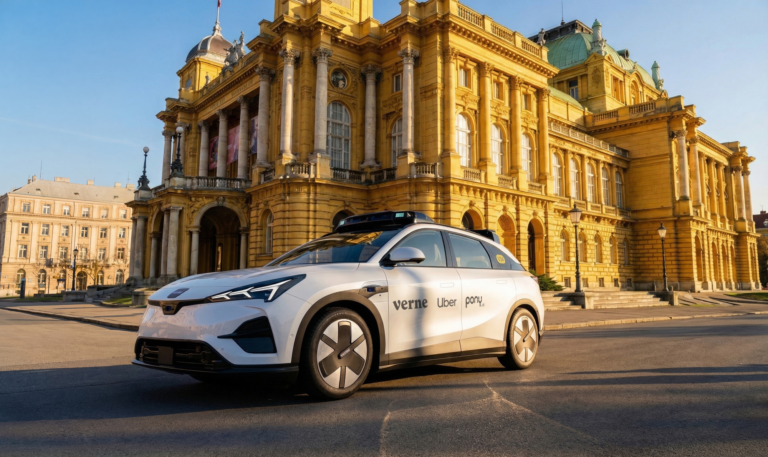
For years, Europe has been seen as moving more cautiously than other regions in the development of autonomous ride-hailing services. That dynamic may now be changing.